
Cluster D — Local · 6 min read
Drought-Stressed Trees in San Antonio: Watering Rules and Warning Signs
By San Antonio Tree Care Team•Published: 2026-03-20•Updated: 2026-10-09

The South Texas Heat Matrix: How Triple-Digit Summers Starve Tree Roots
San Antonio summers routinely feature extended stretches of 100°F+ temperatures combined with intense solar radiation and Stage 2 or Stage 3 municipal watering restrictions. Under these extreme environmental conditions, mature shade trees face severe physiological dehydration.
A large mature live oak or pecan can transpire between 150 and 300 gallons of water per day through leaf stomata to stay cool. When soil moisture in shallow limestone or baked Blackland clay is completely exhausted, the tree xylem vessels experience immense negative pressure. This can cause cavitation—microscopic air bubbles (embolisms) that permanently rupture water-conducting vessels, cutting off water supply to upper branches.
Recognizing Early Warning Signs of Acute Drought Stress
Catching drought stress early allows intervention before irreversible vascular failure occurs. Look for these hallmark progression symptoms across your yard:
• Foliar Curling & Margin Scorching: Leaf edges turn crisp and brown while the central portion remains green, starting in the sun-exposed upper crown.
• Premature Leaf Drop: Trees shed foliage in July and August as a survival mechanism to reduce surface area and cut transpiration water loss.
• Heavy Ball Moss Proliferation: Weakened, defoliating branches allow intense sunlight into interior canopies, stimulating rapid epiphyte colonization.
• Hypoxylon Canker Outbreaks: Secondary pathogenic fungi (Biscogniauxia atropunctata) attack stressed hardwoods, causing bark to slough off and revealing dark, charcoal-like fungal mats along the trunk.
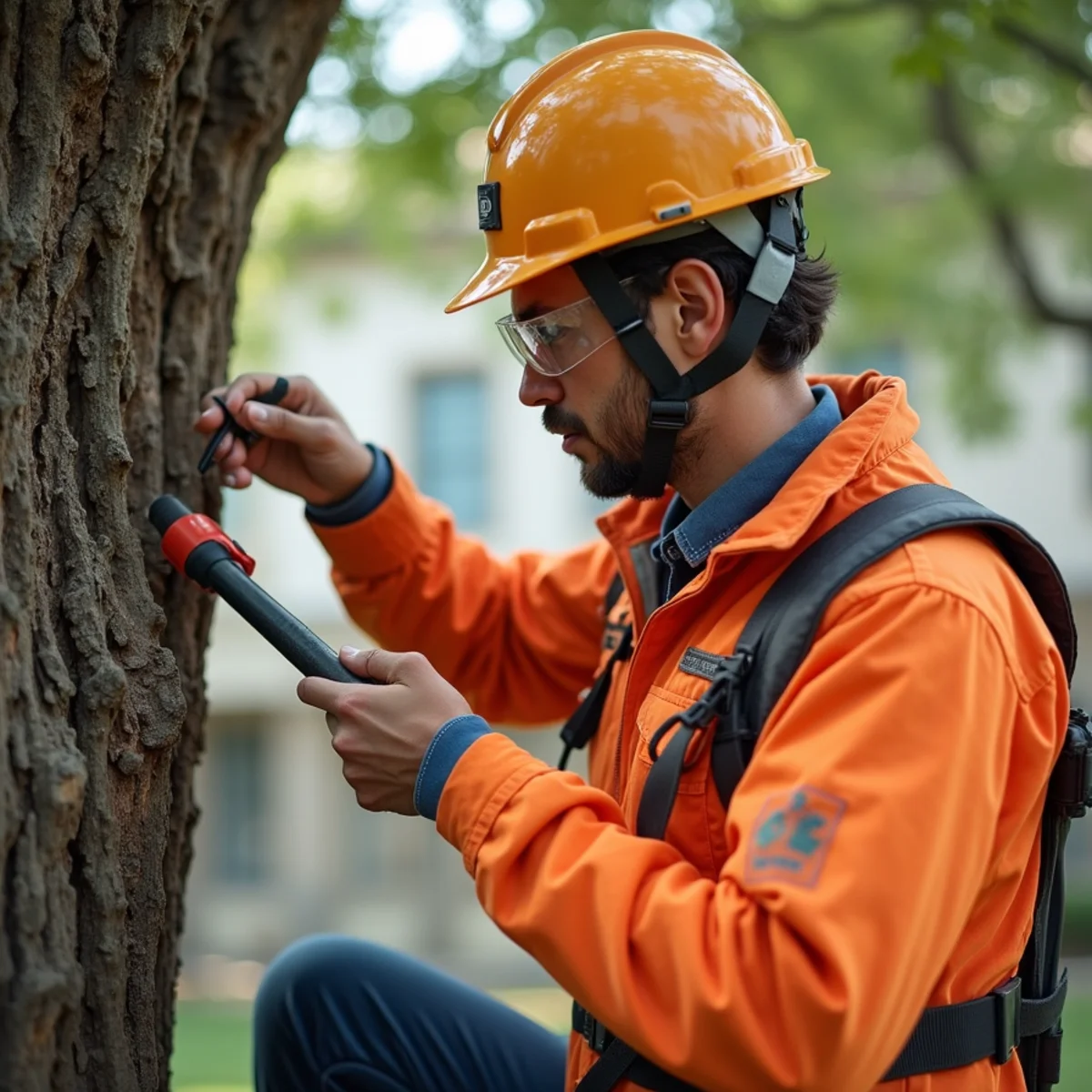
Call back within 15 minutes, on site within 2 hours inside Loop 1604
Dealing with Tree Hazards on Your Property?
Call our licensed San Antonio arborists now for 24/7 emergency dispatch or a free on-site estimate.
City of San Antonio Tree License · $1M+ General Liability · Zero Obligation Estimates
The Deep-Root Soaking Protocol: Proper Volume, Location & Delivery
The most common watering mistake made by San Antonio homeowners during drought is running automated lawn sprinkler systems for 15 minutes twice a week. Frequent, shallow lawn irrigation only wets the top inch of turf, failing to penetrate 12 to 18 inches down where primary tree feeder roots reside.
To save a drought-stressed tree, perform slow, deep root soaking once every 10 to 14 days. Place a soaker hose or coiled drip line in concentric circles starting halfway between the trunk and the drip line, extending several feet beyond the outer edge of the canopy. Run the hose on low pressure for 4 to 6 hours, delivering a slow, penetrating soak that saturates the soil profile without surface runoff.
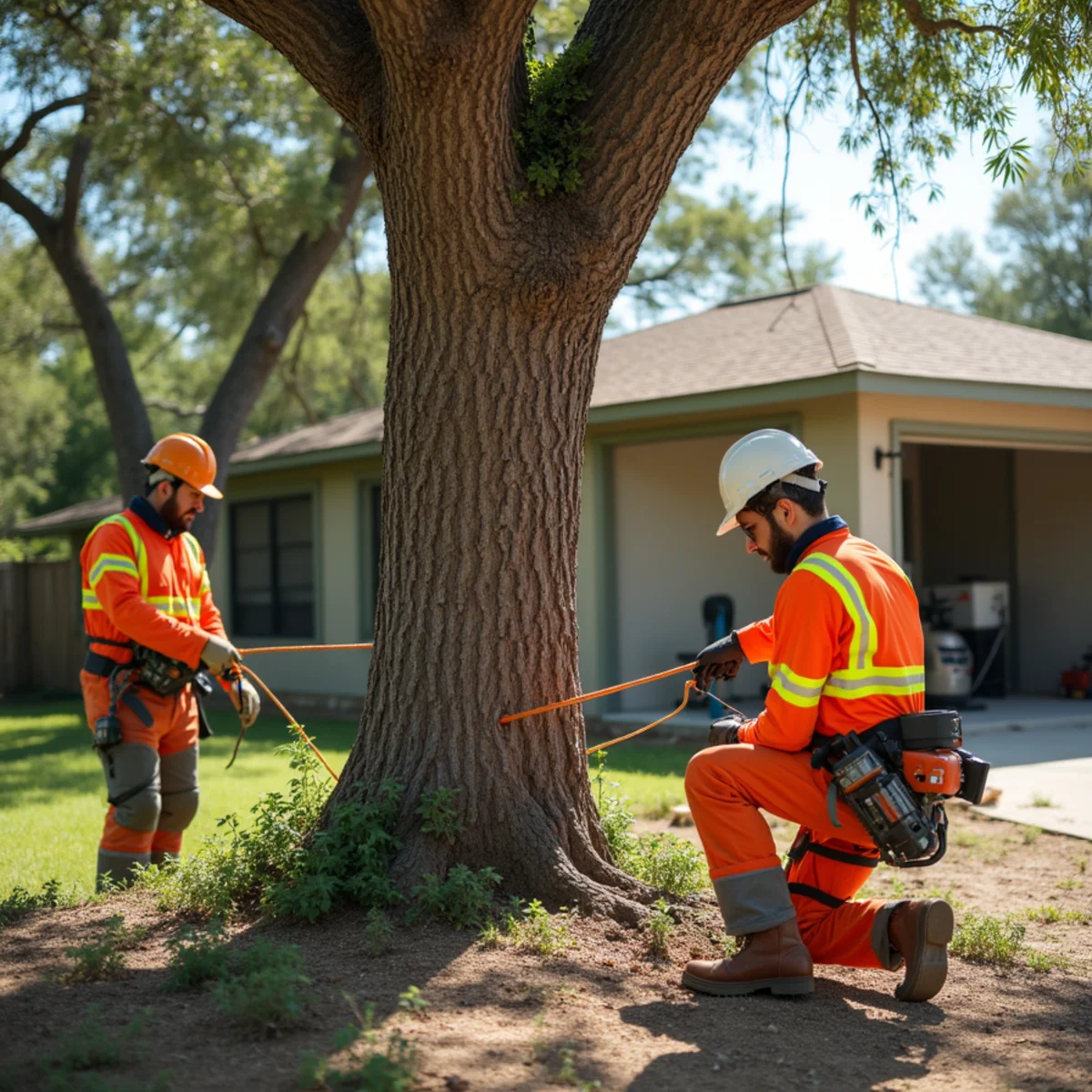
Organic Hardwood Mulching: Soil Insulation & Moisture Retention
In unshaded San Antonio turf, bare soil temperatures during July can exceed 130°F, literally baking surface root systems. Applying a generous 3-to-4-inch layer of organic, coarse hardwood mulch across the root zone is the single most cost-effective drought therapy available.
Mulch functions as a natural thermal blanket, reducing soil temperatures by up to 25°F and cutting evaporative moisture loss by more than 50%. Always follow the doughnut method: extend mulch across the entire drip line, but maintain a clear 4-to-6-inch buffer around the base of the trunk. Never pile mulch against trunk bark (volcano mulching), which creates moisture traps that rot bark and invite pest infestation.
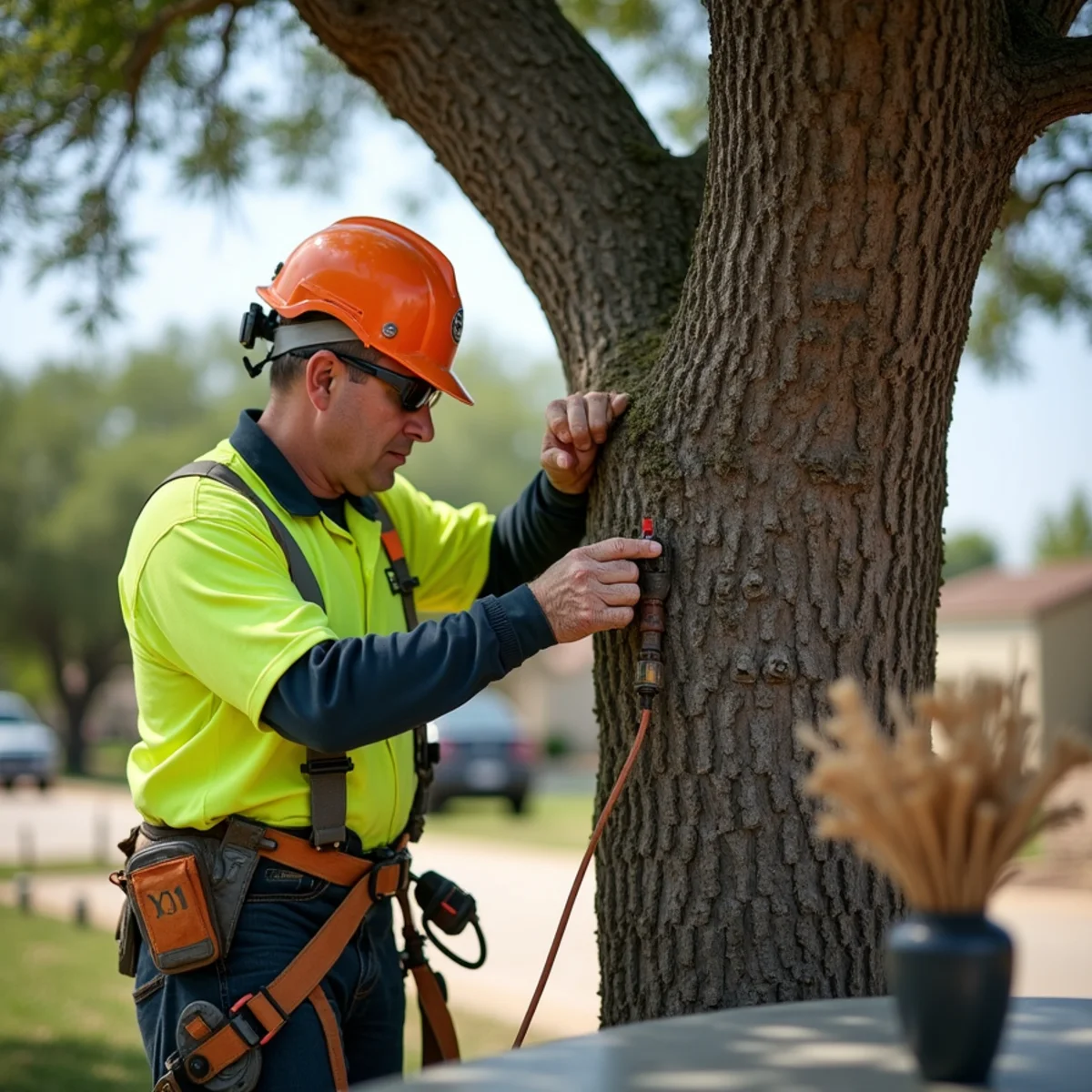
What NOT to Do During a Drought: Nitrogen Fertilizer & Heavy Pruning
Well-meaning property owners frequently compound drought stress by applying high-nitrogen lawn fertilizers or ordering heavy canopy pruning to 'relieve stress'. Both practices can be fatal to struggling trees in mid-summer.
High-nitrogen fertilizers force trees to expend precious root starches producing flush vegetative growth that demands enormous amounts of water the root system cannot supply. Similarly, removing living green branches during drought eliminates the leaf surface area needed to manufacture carbohydrates. During drought, restrict pruning strictly to hazardous deadwood, and never fertilize until trees enter winter dormancy.
Common Questions Related to This Guide
A large mature live oak needs approximately 5 to 10 gallons of water per inch of trunk diameter every 10 to 14 days during extreme drought. A 20-inch DBH oak requires approximately 100 to 200 gallons per soaking.
Related Services & Local Coverage
Explore professional services and local neighborhoods mentioned in this guide:
Call back within 15 minutes, on site within 2 hours inside Loop 1604
Protect Your Trees & Property with San Antonio's Best
Speak with our certified arborist team today. Transparent estimates, licensed crews, and 24/7 response.
City of San Antonio Tree License · $1M+ General Liability · Zero Obligation Estimates