
Cluster E — Prevention · 6 min read
7 Warning Signs a Tree Is About to Fail
By San Antonio Tree Care Team•Published: 2026-03-20•Updated: 2026-10-09
Understanding Tree Risk: Target Zones, Structural Defects & Failure Likelihood
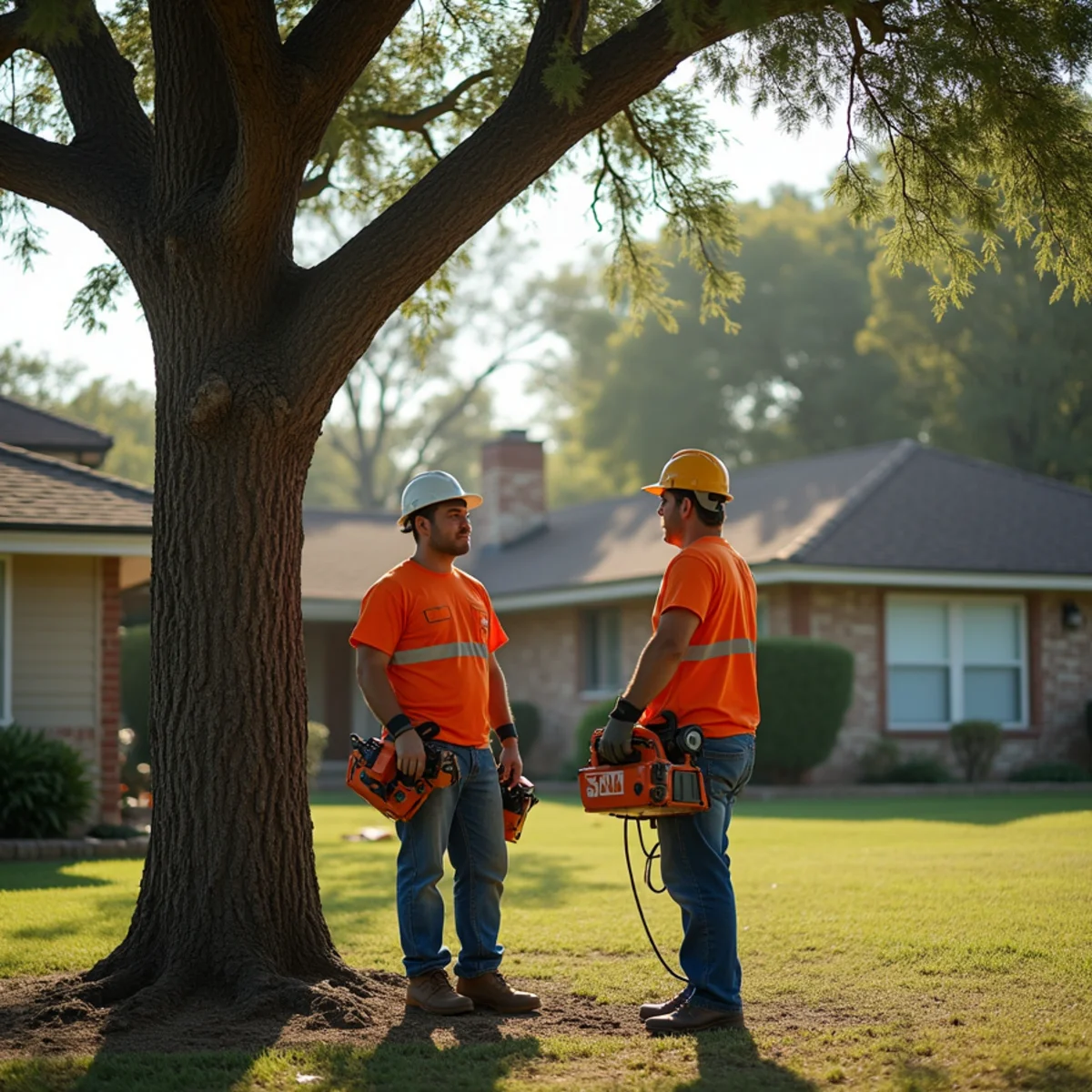
In the professional practice of Tree Risk Assessment (TRAQ), a tree is not classified as hazardous simply because it is large or old. A true hazard exists only when three specific criteria intersect: a structural defect in the tree, an external force capable of causing mechanical failure (such as wind, ice, or gravity), and a valuable target zone (such as a residential home, driveway, detached garage, or public sidewalk).
A large hollow oak standing in an isolated 50-acre cow pasture poses minimal risk because there is no target beneath it. However, that exact same hollow tree standing 15 feet from an occupied bedroom or children play area in a San Antonio subdivision represents an unacceptable life-safety hazard that demands immediate arborist intervention.
Sign 1 & 2: Basal Decay Conks & Trunk Cavities Exceeding 30% Volume
The lower trunk and root flare support the entire weight of the tree. Two of the most critical structural warning signs occur in this critical zone:
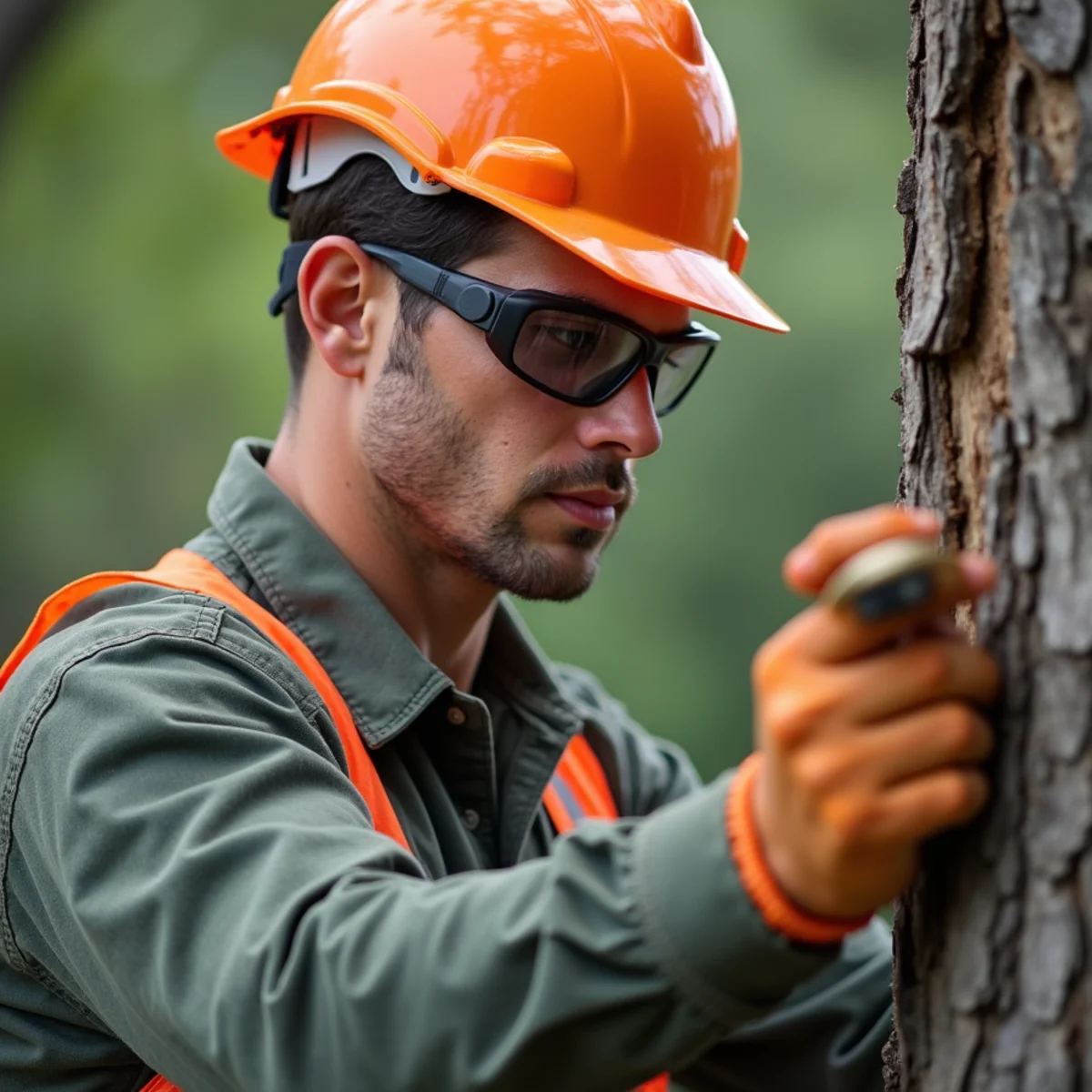
• Fungal Conks & Mushrooms (Ganoderma & Inonotus): The appearance of woody bracket mushrooms or fleshy fungal fruiting bodies growing directly out of the bark or root flare indicates that internal wood-decay fungi have consumed heartwood structural cellulose. By the time mushrooms emerge, extensive internal rot is already present.
• Deep Hollows & Cavities: While hollows are natural in mature hardwoods, a tree whose trunk cavity exceeds 30% to 35% of its total diameter (or possesses less than 1 inch of sound wood per 6 inches of trunk diameter) lacks sufficient strength to resist high wind shear.
Call back within 15 minutes, on site within 2 hours inside Loop 1604
Dealing with Tree Hazards on Your Property?
Call our licensed San Antonio arborists now for 24/7 emergency dispatch or a free on-site estimate.
City of San Antonio Tree License · $1M+ General Liability · Zero Obligation Estimates
Sign 3 & 4: Tight V-Crotch Codominant Stems & Sudden Trunk Lean
Canopy branch architecture provides critical diagnostic clues regarding stability:
• Tight V-Crotch Forks with Included Bark: When two co-dominant trunks grow tightly together forming a narrow 'V' rather than an open 'U', expanding bark gets trapped between the stems. This trapped bark prevents wood grain fusion, creating an internal cleavage wedge that acts like a crowbar during high winds, inevitably splitting in half.
• Sudden, Severe Trunk Lean: While trees that grew naturally with a lean over decades develop curved trunks and compensatory reaction wood to balance themselves, a tree that develops a sudden new lean following heavy rains is failing. Cracking turf or mounding soil on the opposite side indicates severed root anchors.
Sign 5 & 6: Root Plate Heaving & Bark Sloughing (Hypoxylon Canker)
Subterranean and vascular warning signs require immediate expert evaluation:
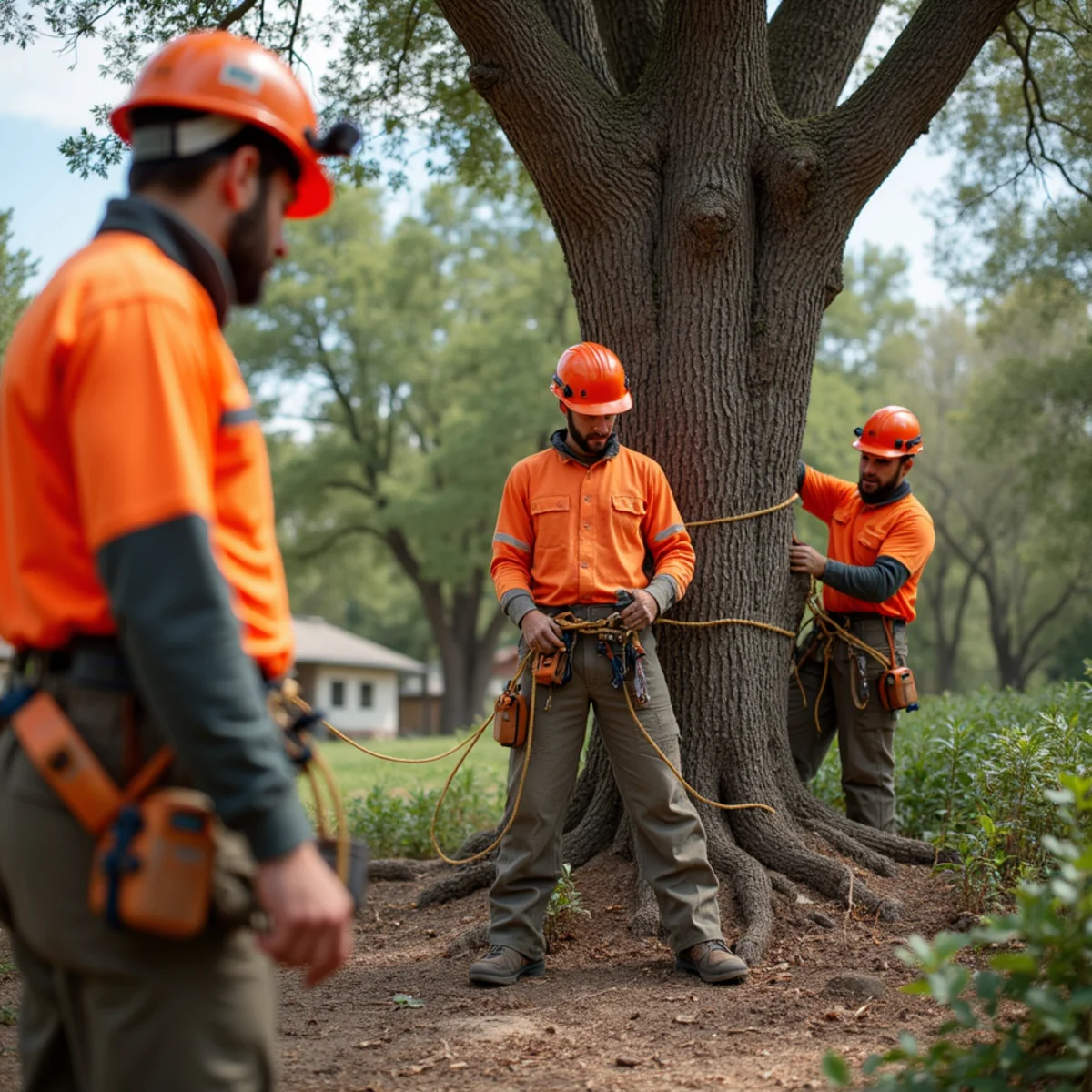
• Soil Mounding & Exposed Snapped Roots: On shallow Hill Country limestone soils, a heaving root plate creates a visible crescent-shaped bulge in the lawn on the side opposite the lean. This is a definitive sign of active subterranean anchor failure; the tree is in imminent danger of blowdown.
• Extensive Bark Sloughing & Charcoal Mats: If large sheets of bark peel away from the trunk to reveal black, crusty fungal mats, the tree is afflicted with advanced Hypoxylon canker. The underlying sapwood is completely dead and brittle, posing severe collapse hazards.
Sign 7: Heavy Deadwood Canopy Accumulation & Hanging Widowmakers
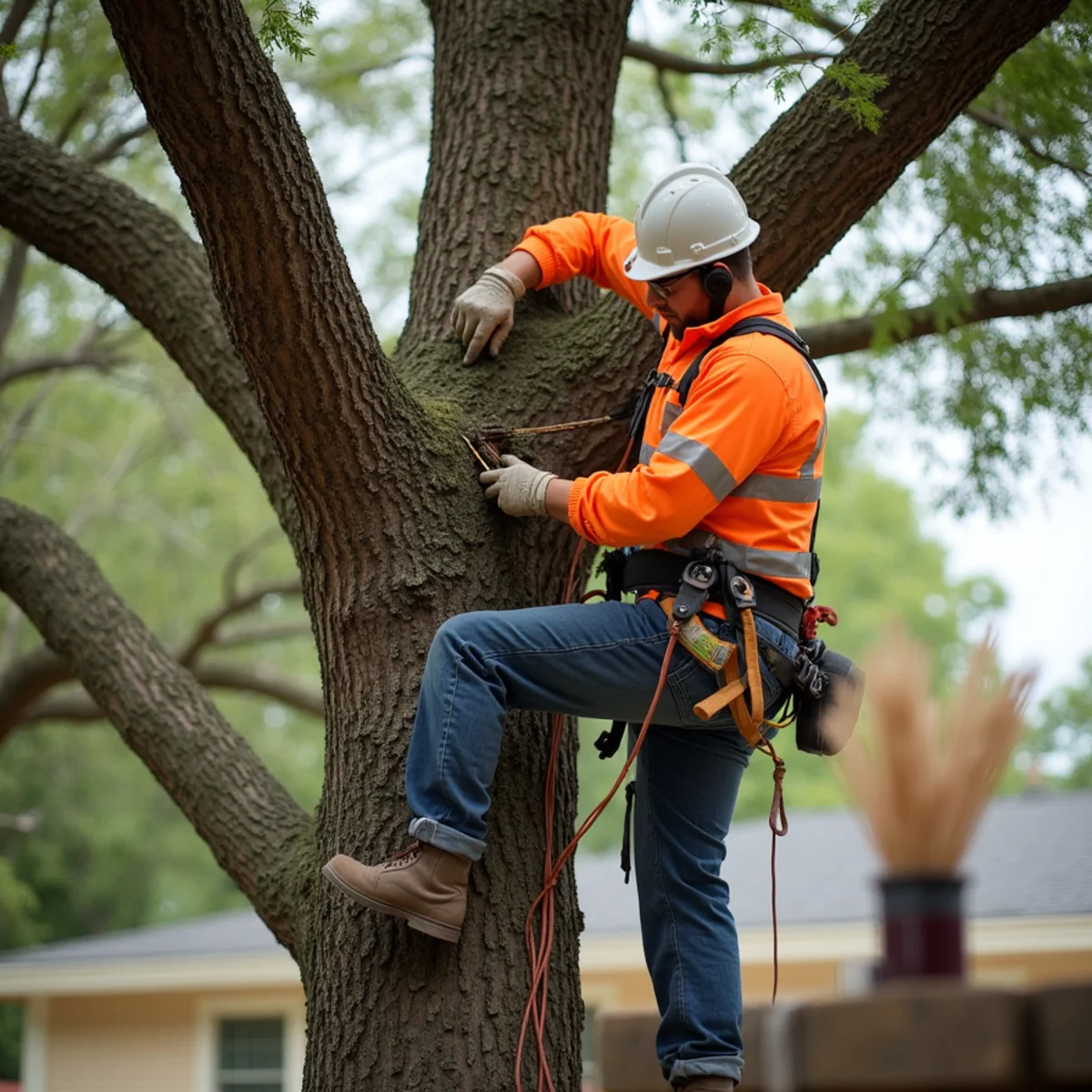
The final major danger sign is the presence of extensive deadwood throughout the upper canopy. Mature branches exceeding 2 inches in diameter lose flexibility within months of dying. During thunderstorms, thermal expansion, or strong wind gusts, these dead limbs snap with zero warning.
Large broken branches caught loosely in the upper canopy—widowmakers—are responsible for more tree-related injuries and roof penetrations in San Antonio than whole-tree blowdowns. Any mature tree with heavy deadwood overhanging outdoor living areas requires prompt crown cleaning and deadwood extraction.
Common Questions Related to This Guide
A tree that grew naturally with a lean develops a curved trunk that straightens upward toward sunlight, with no disturbed soil at the base. A dangerous lean is sudden, with a straight tilted trunk, newly cracked soil, or mounding turf at the root plate.
Related Services & Local Coverage
Explore professional services and local neighborhoods mentioned in this guide:
Call back within 15 minutes, on site within 2 hours inside Loop 1604
Protect Your Trees & Property with San Antonio's Best
Speak with our certified arborist team today. Transparent estimates, licensed crews, and 24/7 response.
City of San Antonio Tree License · $1M+ General Liability · Zero Obligation Estimates