
Cluster C — Core service · 6 min read
Stump Grinding vs. Stump Removal: Which Does Your Yard Need?
By San Antonio Tree Care Team•Published: 2026-03-20•Updated: 2026-10-09
The Core Difference: Mechanical Grinding vs. Complete Excavation
Following the removal of a large tree in San Antonio, property owners must decide how to handle the remaining stump. The two primary eradication methods—mechanical stump grinding and complete stump removal (excavation)—differ substantially in mechanical methodology, cost, site disruption, and end-use objectives.
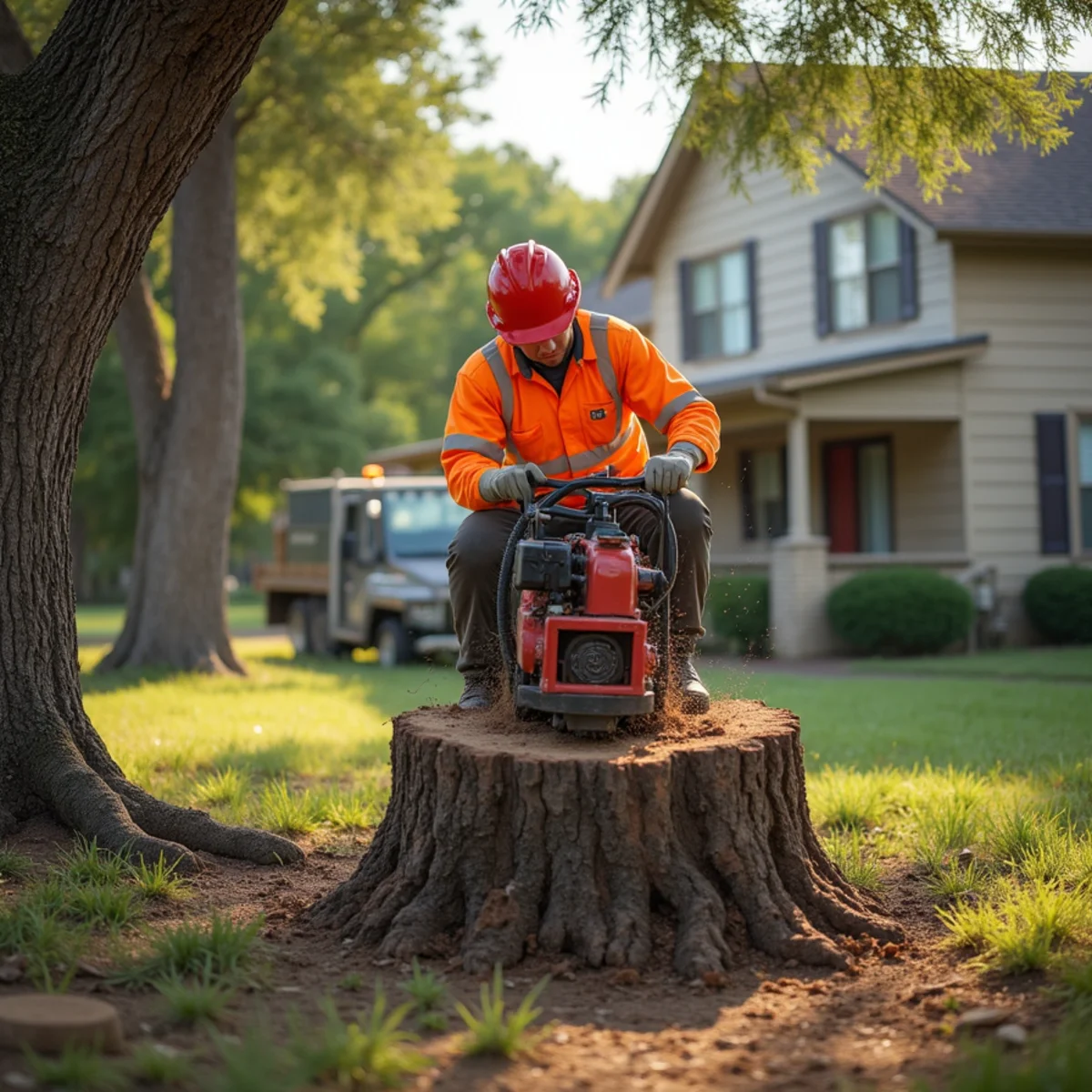
Mechanical stump grinding utilizes high-horsepower tracked machinery equipped with carbide-tipped cutting wheels that pulverize the wood 8 to 12 inches below ground level. In contrast, complete stump removal involves heavy excavators digging out the entire subterranean root ball, extracting tons of soil and root mass. Understanding which approach suits your landscape goals is essential.
How Stump Grinding Works: Subsurface Depths, Root Chasing & Mulch Byproducts
Professional stump grinding is the standard, low-impact choice for 95% of residential properties. Our commercial stump grinders feature articulated cutting heads that sweep back and forth across the stump, grinding hardwood trunk tissue and major surface root flares into a fine, organic woodchip-soil mixture.
Our standard operating depth is 8 to 12 inches below grade, which completely eradicates the crown zone where secondary suckers sprout. For properties preparing for sod installation or concrete driveways, we chase lateral surface roots 10 to 15 feet out from the trunk. The resulting woodchip mulch can either be backfilled into the depression to enrich soil biology or hauled away to leave a clean grade.
Call back within 15 minutes, on site within 2 hours inside Loop 1604
Dealing with Tree Hazards on Your Property?
Call our licensed San Antonio arborists now for 24/7 emergency dispatch or a free on-site estimate.
City of San Antonio Tree License · $1M+ General Liability · Zero Obligation Estimates
When Complete Stump Excavation Is Required: Construction & Foundations
While stump grinding is ideal for residential lawns, complete excavation is mandatory in specific engineering and construction scenarios. If you plan to pour a concrete slab foundation, install an inground swimming pool, or excavate footings for a home addition directly over the stump location, subsurface grinding is insufficient.
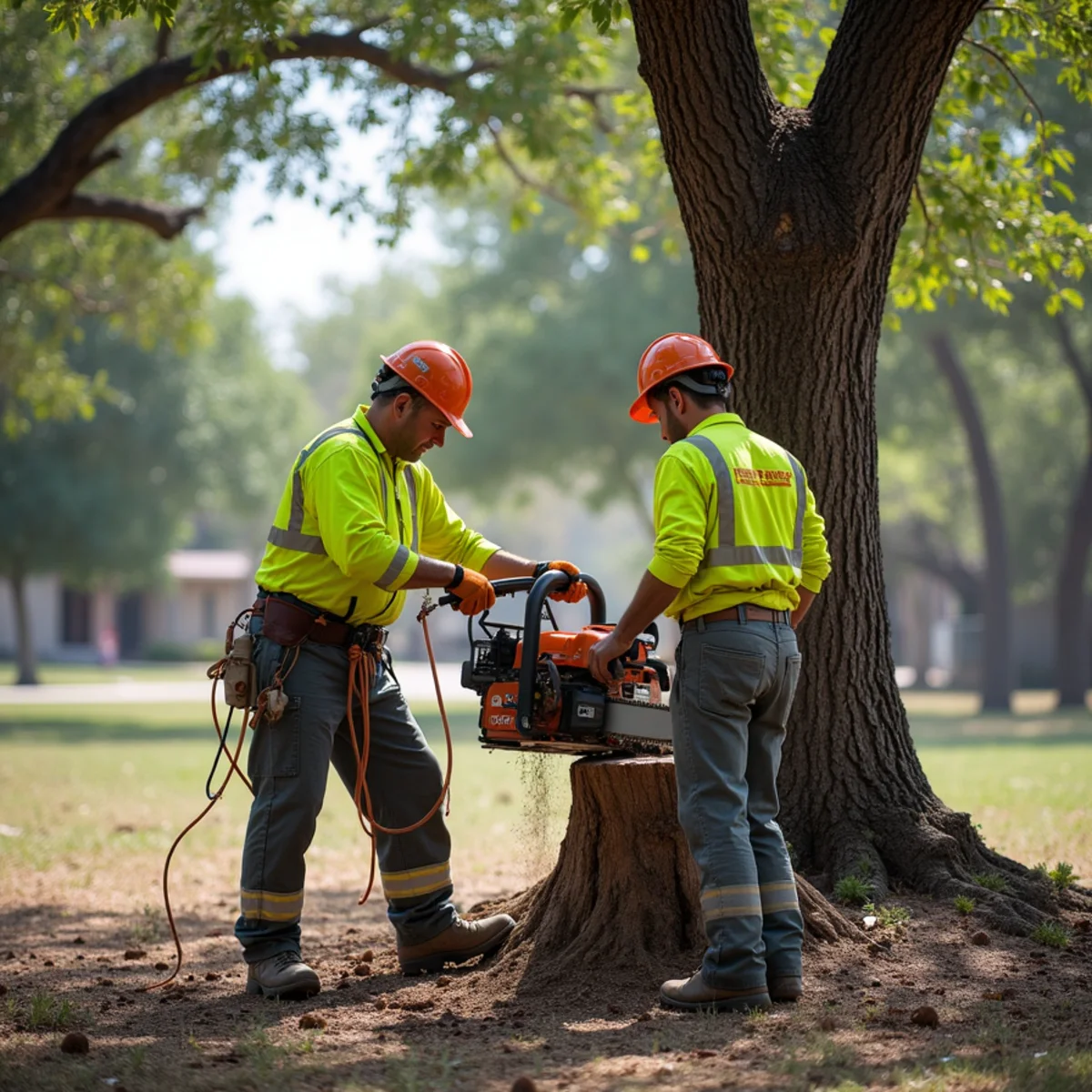
Subsurface wood left behind by grinding will decompose over 5 to 10 years, creating soil voids and subterranean settling that can crack concrete flatwork. Complete excavation uses a 10-to-20-ton excavator to trench around the root ball, severing structural lateral roots with a hydraulic thumb, and lifting the entire multi-ton root mass out of the ground. This creates a massive crater that must be backfilled with compacted engineered fill.
Subterranean Hazards: Texas 811 Utility Locating & Irrigation Safety
Both stump grinding and excavation involve high-energy subsurface cutting that poses severe risks to underground utilities. In San Antonio neighborhoods, natural gas lines, buried electrical service cables, fiber-optic internet lines, and municipal water pipes frequently run within inches of tree root systems.
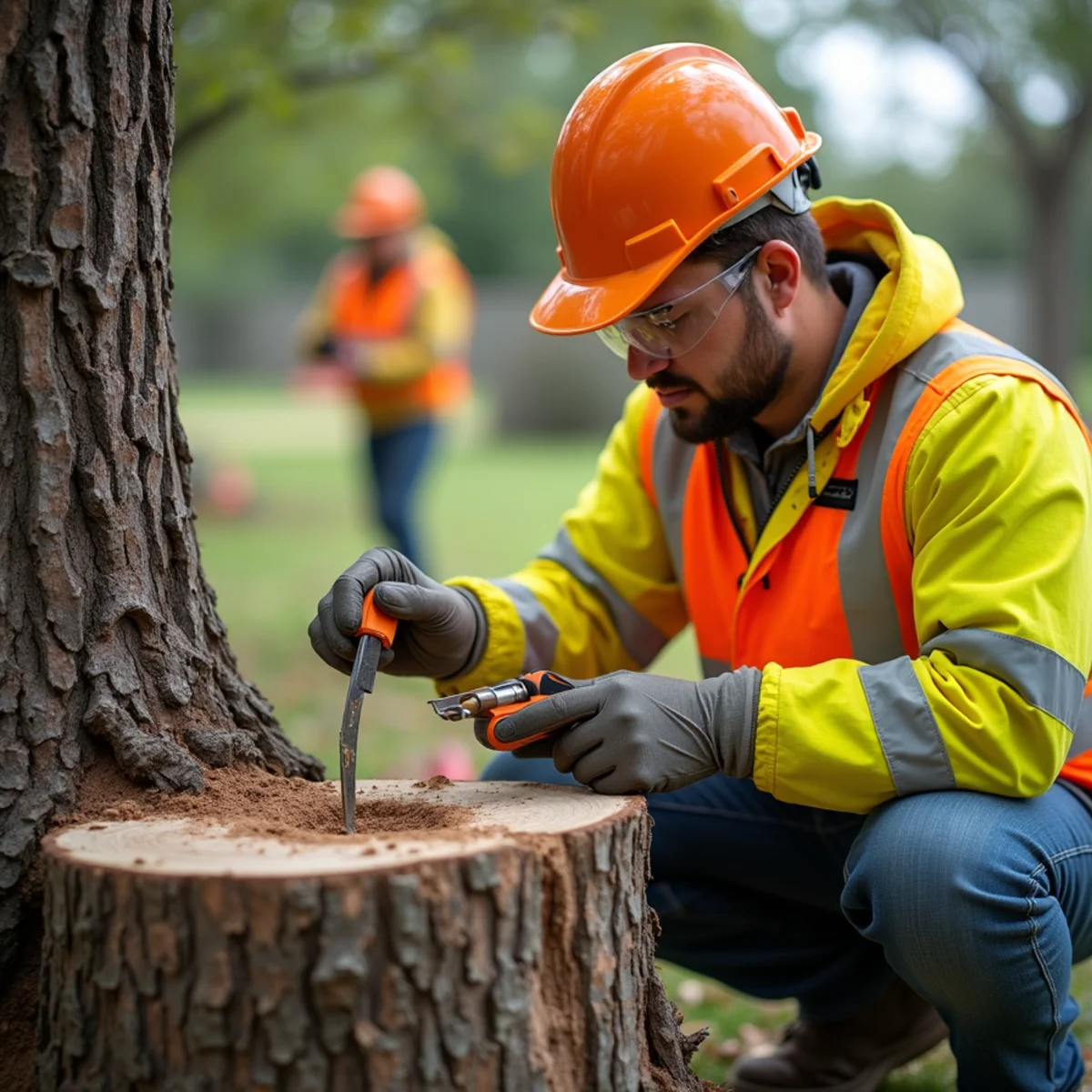
Before operating a stump grinder, state law mandates contacting Texas 811 to mark all public utilities. Private irrigation lines, pool plumbing, and low-voltage landscape wiring are not marked by 811; our crews use specialized electronic pipe locators and hand-trenching techniques to identify private lines before grinding. Grinding without utility location can cause thousands of dollars in utility repairs and severe safety hazards.
Ecological Risks of Leaving Stumps: Termites, Fungi & Pest Infestation
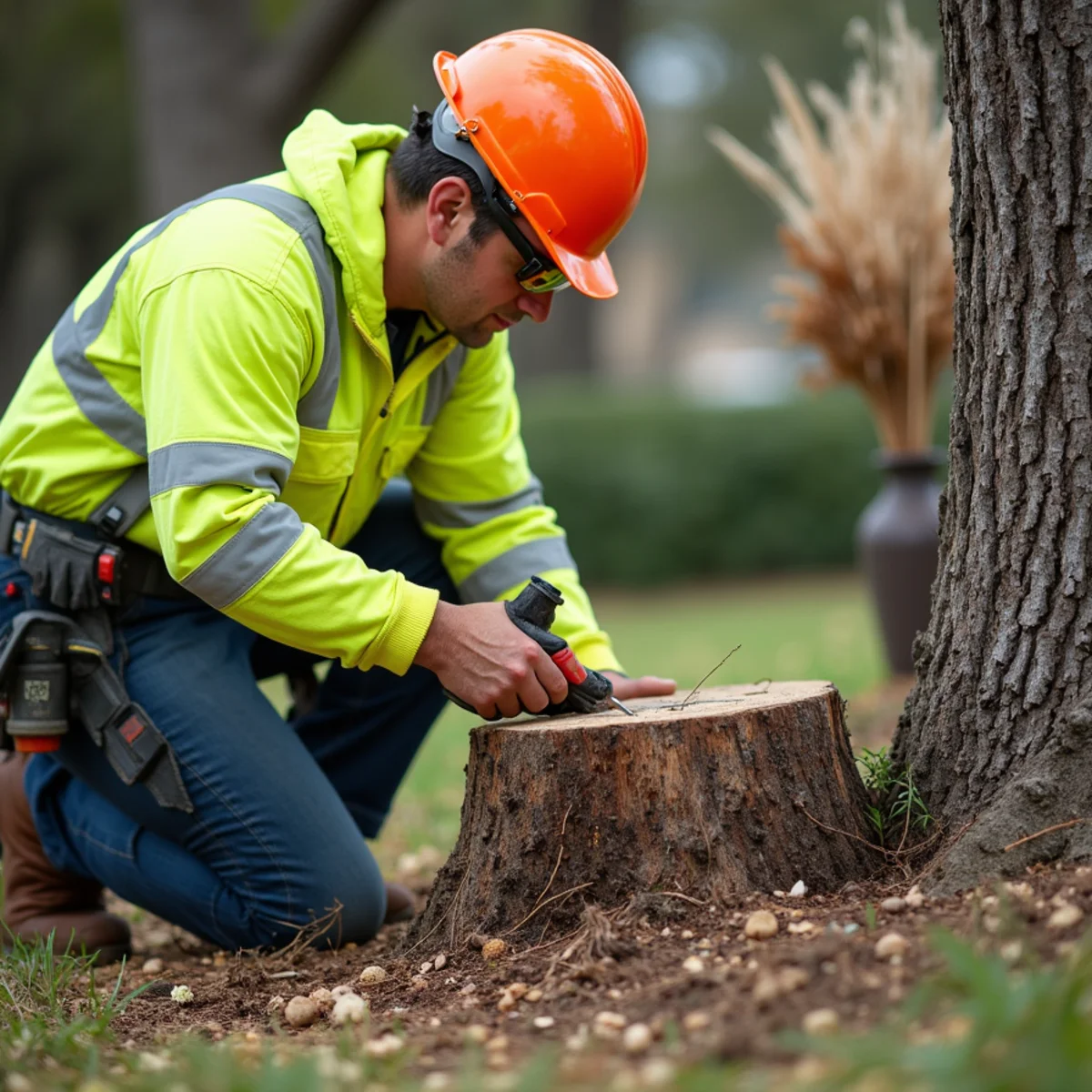
Some homeowners consider leaving cut stumps in place to decay naturally. In South Texas, leaving an untreated hardwood stump in a residential yard creates serious ecological and structural risks. Abandoned stumps become prime colonization sites for subterranean termites (Reticulitermes virginicus) and carpenter ants (Camponotus).
As the stump decomposes, termite colonies establish massive underground nests, eventually foraging outward into residential wall framing and wooden fences within 30 to 50 feet. Furthermore, rotting stumps harbor pathogenic root-rot fungi, such as Ganoderma and Armillaria, which can spread through subterranean root contacts to infect neighboring healthy shade trees.
Common Questions Related to This Guide
It is best to plant a new shade tree at least 3 to 5 feet away from the exact center of the old stump. The ground depression contains dense decomposing woodchips and deep severed roots that can temporarily tie up nitrogen and impede new taproot development.
Related Services & Local Coverage
Explore professional services and local neighborhoods mentioned in this guide:
Call back within 15 minutes, on site within 2 hours inside Loop 1604
Protect Your Trees & Property with San Antonio's Best
Speak with our certified arborist team today. Transparent estimates, licensed crews, and 24/7 response.
City of San Antonio Tree License · $1M+ General Liability · Zero Obligation Estimates