Cluster A — Emergency · 6 min read
Tree Limb on a Power Line: CPS Energy vs. a Tree Crew
By San Antonio Tree Care Team•Published: 2026-03-20•Updated: 2026-10-09
Understanding Power Line Contact: The Critical Demarcation Rules
When a tree branch touches or falls across an electric wire in San Antonio, determining who is responsible for removing it comes down to utility ownership rules. CPS Energy, the nation's largest municipally owned electric utility, maintains legal responsibility for primary high-voltage distribution lines running along public streets, alleyways, and designated utility easements. These lines typically carry 7,200 to 13,200 volts and present lethal electrocution hazards.
However, the secondary electric service drop—the insulated overhead wire running from the neighborhood utility pole directly to your home weatherhead mast—is classified as customer-side infrastructure. While CPS Energy will temporarily disconnect power at the pole if your weatherhead is damaged, property owners are responsible for trimming private trees that encroach upon or contact this secondary service drop.
Why Trimming Near Electric Lines Requires High-Voltage EHAP Certification
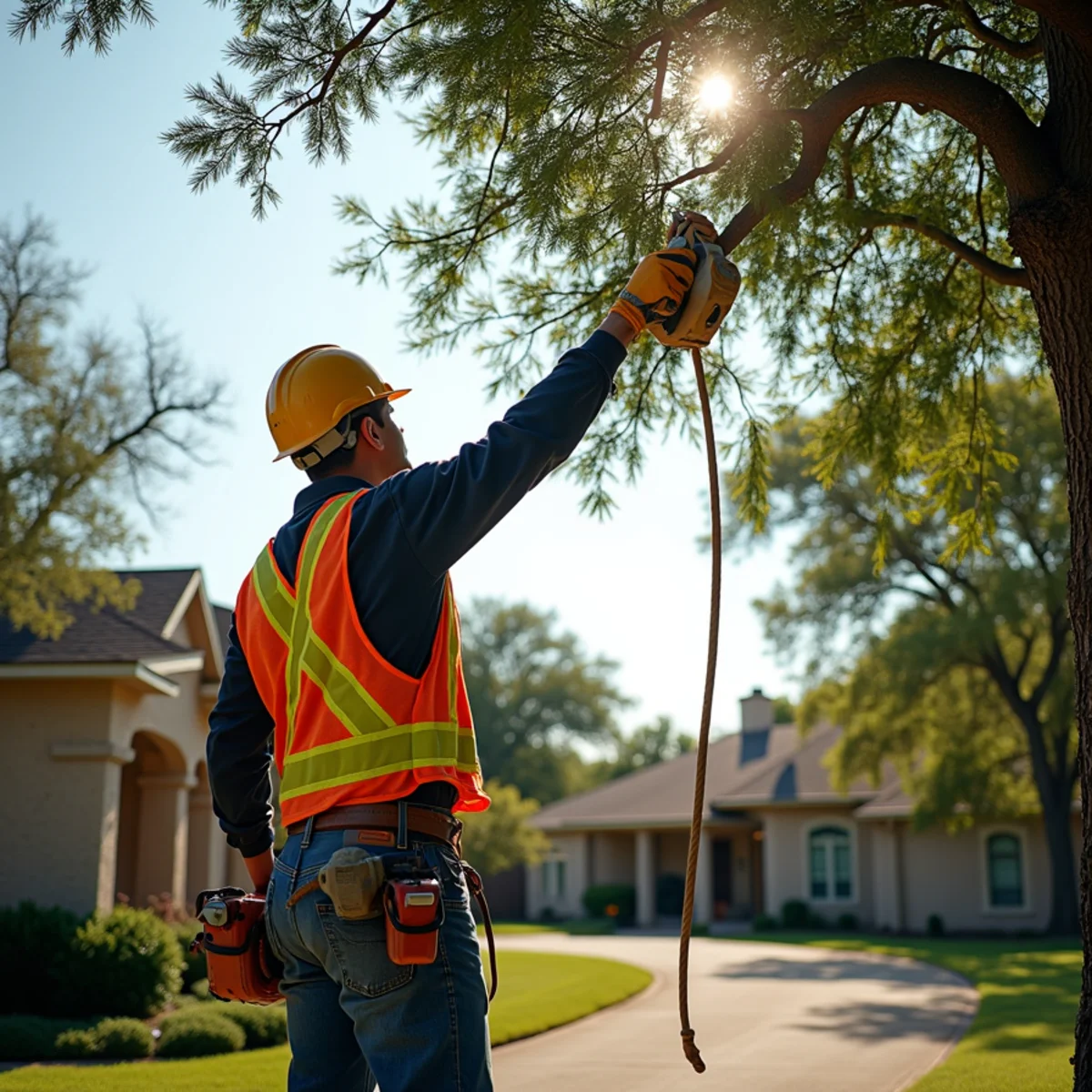
Pruning branches within the electrical strike envelope is one of the most hazardous operations in the tree care industry. Federal OSHA regulations (29 CFR 1910.269) and ANSI Z133 arboricultural safety standards strictly prohibit unqualified individuals and non-certified tree services from working within 10 feet of energized electrical conductors.
Our professional arborists undergo specialized Electrical Hazards Awareness Program (EHAP) certification. This training covers minimum approach distances, the behavior of electrical arcs, phase-to-ground flashovers, and the mandatory use of dielectric insulated aerial bucket trucks and fiberglass pruning poles tested to withstand 100,000 volts per foot. Uncertified tree trimmers using aluminum ladders or steel-core climbing ropes near lines risk instantaneous electrocution.
Call back within 15 minutes, on site within 2 hours inside Loop 1604
Dealing with Tree Hazards on Your Property?
Call our licensed San Antonio arborists now for 24/7 emergency dispatch or a free on-site estimate.
City of San Antonio Tree License · $1M+ General Liability · Zero Obligation Estimates
The Lethal Reality of Hot Tree Wood and Arc Flash Explosions
Many homeowners mistakenly believe that wooden branches cannot conduct electricity. In reality, living South Texas hardwood trees—especially live oaks, cedar elms, and pecans—contain dense networks of xylem and phloem sap vessels saturated with moisture and conductive mineral salts. When a branch contacts a bare primary power wire, electrical current flows immediately down the branch.
During damp Texas winter mornings or humid summer thunderstorms, electrical arcing can superheat internal sap instantly, vaporizing moisture and causing branches to explode with violent concussive force. Furthermore, electrical current can travel down the trunk into the surrounding turf, creating dangerous step-potential voltage that can electrocute people or pets walking dozens of feet away from the tree trunk. If you observe smoking bark, sparking wires, or glowing embers in a tree crown, maintain an absolute minimum exclusion perimeter of 30 feet.
What CPS Energy Will and Will Not Clear Across Greater San Antonio
To manage your expectations during line clearance calls, understand CPS Energy standard operating procedures. When notified of tree contact with primary distribution lines, CPS Energy tree contractors will prune branches back to achieve safe operational clearance (typically 10 to 15 feet around primary wires). However, utility pruning is designed purely for electrical reliability, not arboricultural aesthetics; crews will not perform crown balancing or structural thinning.
Crucially, CPS Energy crews do not clear branches from secondary drops, nor do they clear branches over private telephone, fiber-optic, or cable television lines. If a storm causes a private tree branch to rest on your service drop without tearing it down, CPS Energy will typically advise you to hire a licensed private tree service to perform the precision rigging necessary to extract the limb safely.
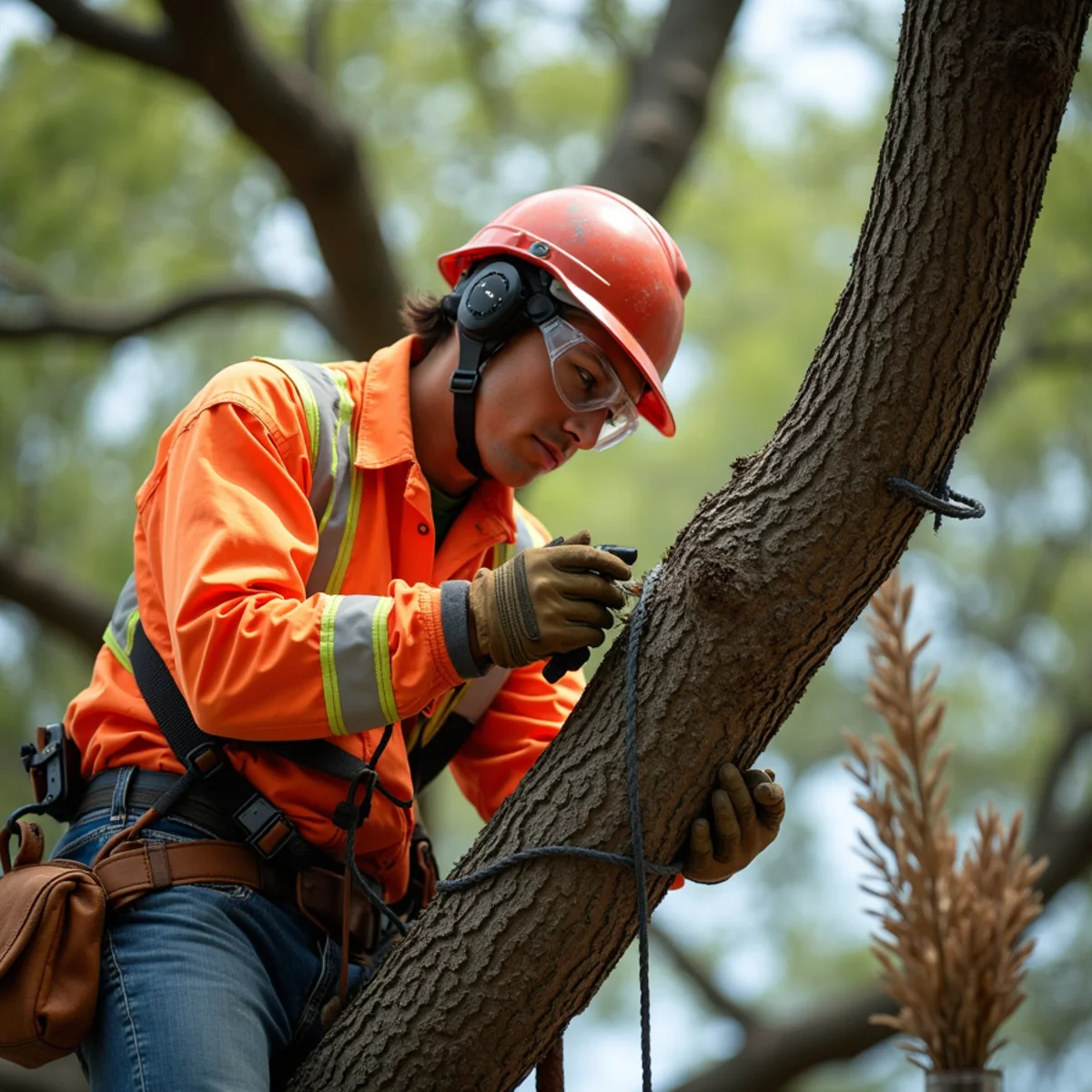
How Licensed Arborists Safely Clear Secondary Weatherhead Drops
Clearing tree limbs from private service drops requires careful mechanical coordination. Our certified crews begin by assessing whether the line is under physical tension. If a heavy limb has pinned the service drop downward, simply cutting the branch from the ground can cause the wire to whip upward violently, snapping the weatherhead pipe from your home roof deck or pulling the meter box off the exterior wall.
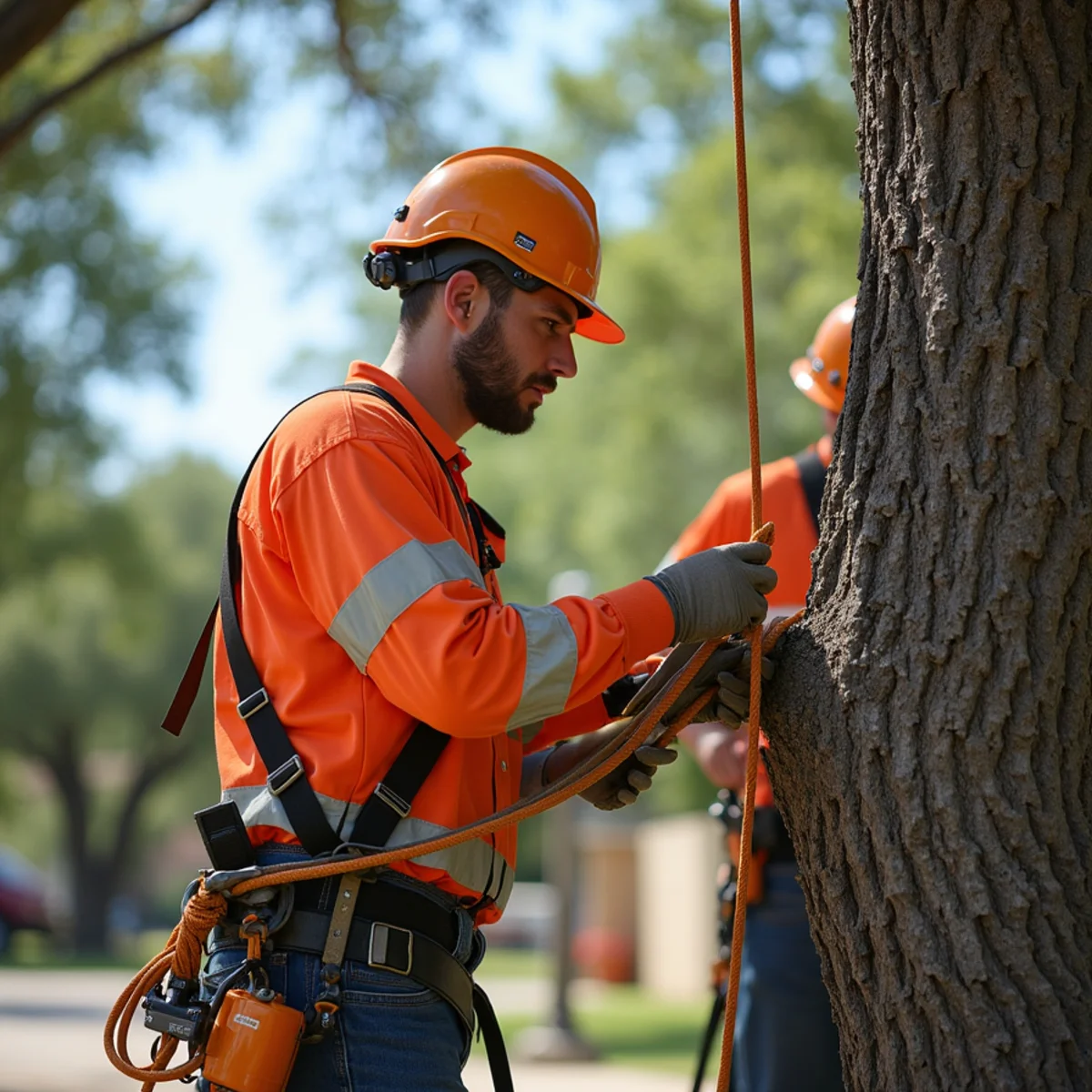
We coordinate with CPS Energy to schedule a temporary service disconnect when necessary. Our climbers establish rigging anchors high in the canopy above the hazard, attaching load-rated synthetic taglines and arborist friction winches to support the entire weight of the branch. We then make precision relief cuts, lifting the wood away from the wire under complete physical control before lowering it safely to the ground.
Common Questions Related to This Guide
Call CPS Energy emergency dispatch immediately at (210) 353-HELP (4357) and dial 911 if active fire or immediate life safety hazards exist. Stay at least 30 feet away from the tree and all grounded metal objects.
Related Services & Local Coverage
Explore professional services and local neighborhoods mentioned in this guide:
Call back within 15 minutes, on site within 2 hours inside Loop 1604
Protect Your Trees & Property with San Antonio's Best
Speak with our certified arborist team today. Transparent estimates, licensed crews, and 24/7 response.
City of San Antonio Tree License · $1M+ General Liability · Zero Obligation Estimates